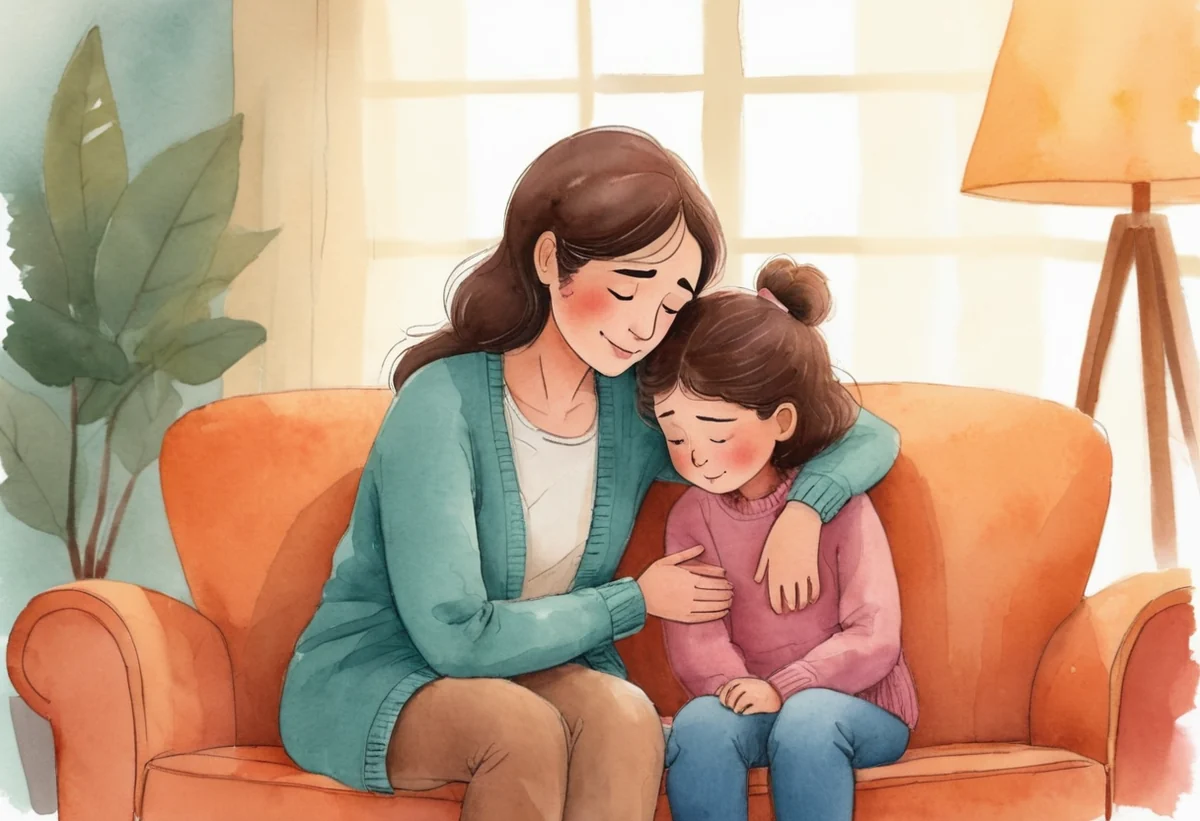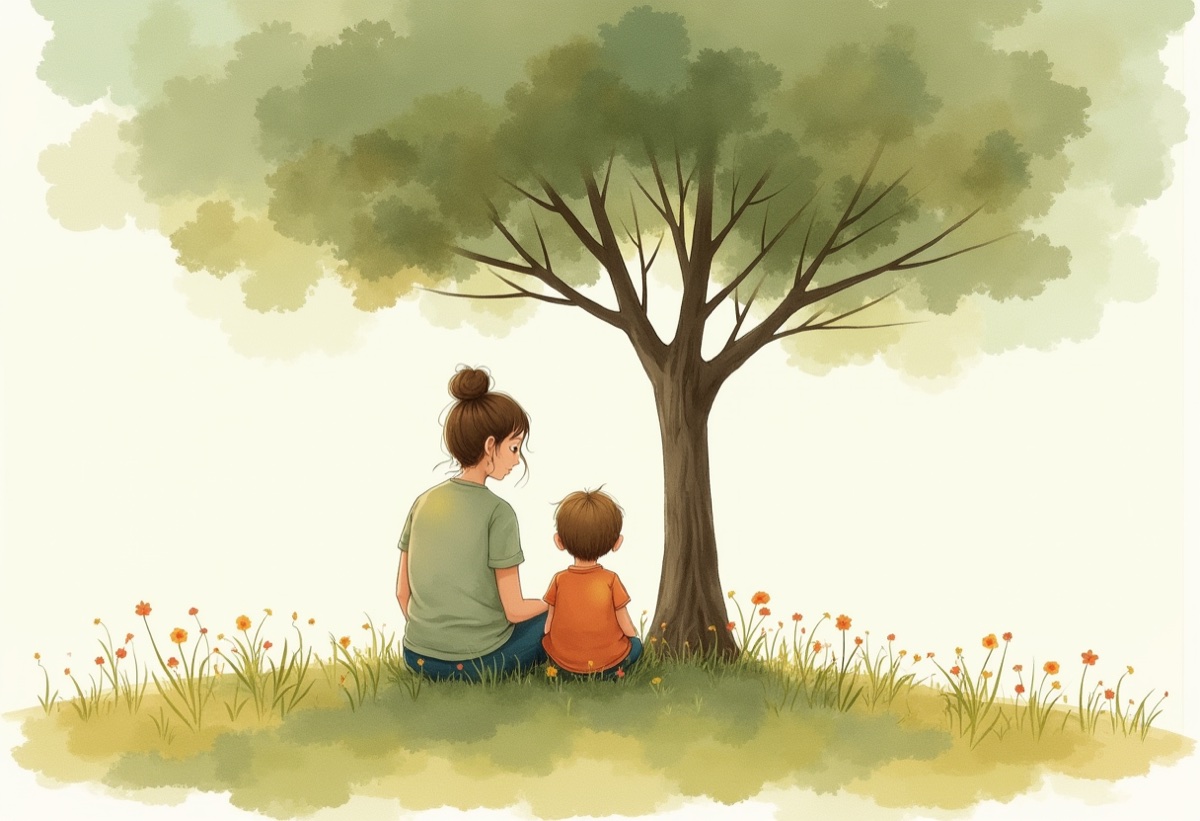
There's no version of this conversation that feels easy, and there's no perfect script — but there is a simpler approach than most parents expect: answer honestly, in words your child's age can hold, and let them lead with their own questions rather than trying to cover everything at once.
Why this conversation feels so hard
Most of us didn't get a good model for this growing up. Death was either not discussed, or explained with a phrase meant to soften it — "gone to sleep," "passed away," "went on a trip" — that can genuinely confuse a young child, who takes language literally. The result is that a lot of parents either say too little, out of fear of saying the wrong thing, or say something accidentally frightening while trying to be gentle.
The good news: kids don't need a perfect explanation. They need an honest one, sized to what they actually asked.
The words that help — and the ones that confuse
For young children especially (roughly ages 4–7), concrete language works better than soft language. It feels harder to say, but it's actually easier for a child to understand and trust.
- Use: "died," "death," "dead." Avoid: "passed away," "went to sleep," "we lost them," "gone away" — young kids can take these literally, and "went to sleep" in particular can create real fear around bedtime.
- Use: "Their body stopped working and won't start again." Avoid: vague biological explanations that leave room for a child to think it might be reversible or catching, like an illness.
- Use: short, direct answers to the actual question asked. Avoid: a long explanation covering everything you're afraid they'll ask — most kids ask for exactly as much as they're ready to hear, and no more, if you let them set the pace.
By age: what to expect and how to talk about it
Ages 4–6
Young children often don't yet understand that death is permanent and universal — they may ask the same question more than once, or ask if the person is coming back, not because they weren't listening but because the concept is still forming. Keep answers short, honest, and concrete. It's okay to say "I don't know" to questions about what happens after death if that's genuinely your answer — kids can handle honesty better than a story that doesn't quite hold together.
Ages 7–9
By this age most kids grasp that death is permanent and can happen to anyone, which sometimes brings a new kind of worry — about their own safety, or a parent's. It's common for a child this age to ask anxious follow-up questions ("are you going to die too?"). Answer honestly rather than with a blanket reassurance you can't guarantee — something like "I plan to be here for a very long time, and if anything ever happened, you would always be taken care of" is honest and comforting without over-promising.
Ages 10–12
Preteens can usually handle a fuller, more adult conversation, including the specifics of what happened if that's appropriate. What they often need most at this age isn't more information — it's permission to have big or confusing feelings about it, including feelings that don't match what they think they're "supposed" to feel.
What to do when you don't know the answer
"I don't know" is a completely valid answer to the biggest questions here — what happens after we die, why someone died, whether it was fair. Kids aren't looking for certainty as much as they're looking for a steady adult who isn't afraid of the question. "I don't know, but I think about it too" is often more comforting than a confident answer that doesn't quite ring true.
Signs a child might need more support
Grief in kids doesn't always look like sadness — it can show up as anger, trouble sleeping, regression in younger kids (like renewed bedwetting), or seeming oddly unaffected before feelings surface later. All of this can be a normal part of processing loss. If big reactions are lasting many weeks with no easing, or are seriously disrupting daily life, that's a good moment to loop in your pediatrician or a child therapist — not a sign anything went wrong in how the conversation was handled.
Talking about it more than once
This isn't usually a single conversation — kids often return to the topic weeks or months later, sometimes at odd moments (in the car, at bedtime), as they process it in stages that match their developmental stage. That's normal, not a sign the first conversation didn't work. Staying open every time the topic comes back up matters more than getting it exactly right the first time.
Some families find it easier to open this door before there's a real loss to talk about — through a book, a pet's passing, or a guided conversation designed for exactly this. Our All the Feels topic includes scenarios built for talking through big, hard feelings together, at a pace your family sets.
Explore All the Feels →The short version
Use honest, concrete words. Answer the question that was actually asked, not the one you're afraid of. "I don't know" is allowed. Expect this conversation to come back around more than once. And know that there's no way to make this conversation painless — only ways to make it honest, safe, and something your child feels they can bring to you again.