The Chore That Always Falls to You
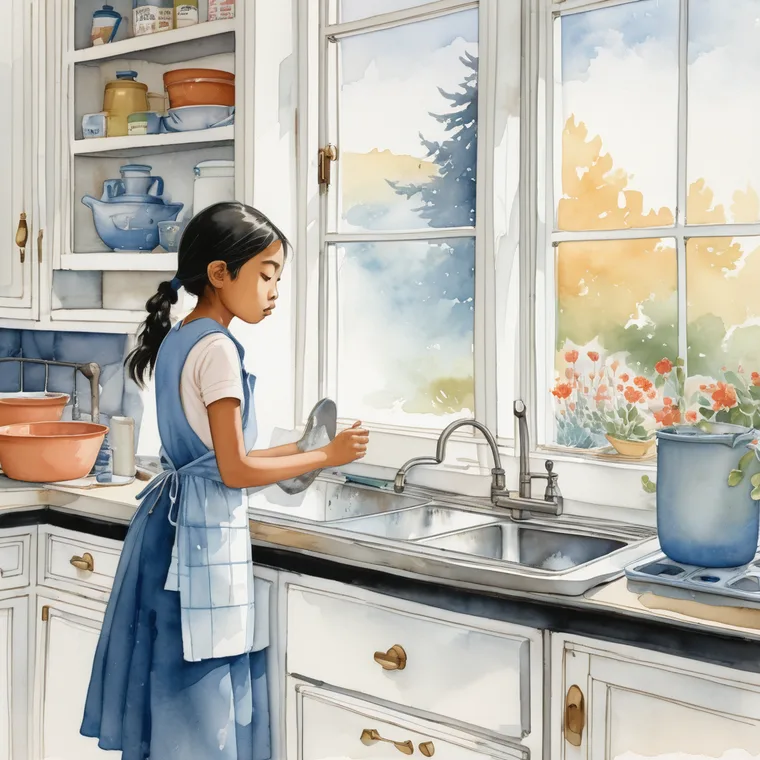
Imagine this…
Somehow, the bins are always your job. Emptying the dishwasher is your job. When something needs carrying in from the car, your name is the one that gets called. Your younger sister gets asked to do almost nothing, and when she does help, everyone makes a big deal about how wonderful she is. Tonight you're asked, again, to take the rubbish out. You can hear your sister in the next room, doing nothing. Something in you wants to say "why is it always me?" — but you also don't want to start a row at dinner.
›Dig a little deeper
›Try it out
›Reflect
From where you're standing, this feels like being punished for being trustworthy. Every extra job carries a quiet message: you're the one who can be relied on, so you're the one who gets asked. That's a compliment buried inside something that feels deeply unfair, and the unfairness is the part you feel most. Your parents may not see it as uneven at all. Your sister may genuinely not realise she does less. Nobody in this picture is necessarily being unkind. But a fairness that's invisible to everyone except you can slowly turn into a resentment that poisons ordinary evenings.
The most useful move is to name the pattern calmly, not to explode in the moment you're asked. You could say: "I've noticed I do the bins, the dishwasher, and the car most nights. Can we look at how the jobs are split?" That turns a complaint into a problem the family can solve together. If saying it at dinner feels too confrontational, you could pick a quiet moment with one parent, or write the jobs down and show them — sometimes a list is more convincing than a feeling. If nothing changes: you keep doing more, the resentment keeps building, and one ordinary night it comes out as a snap that seems to be about the bins but really isn't. The unfairness doesn't fix itself just because you stayed quiet about it.
Doing more than your share doesn't make you a doormat, and noticing it doesn't make you lazy. Fairness at home only gets fixed when someone is brave enough to point at it calmly instead of carrying it silently. You're allowed to ask for fair — you just get a better result when you ask without the explosion.
Had this conversation?
Mark it done to keep track of the conversations your family has had.

We're always looking for real situations to turn into new scenarios. If something like this has come up in your family, tell us about it — it might end up helping another family too.